



-
The Isolation and DNA Extraction of Phytophthora from Four Wildland Soil Types in Northern California, Humboldt County
Angelina Lasko, Christopher Lee, David S. Baston, and Susan E. Marshall
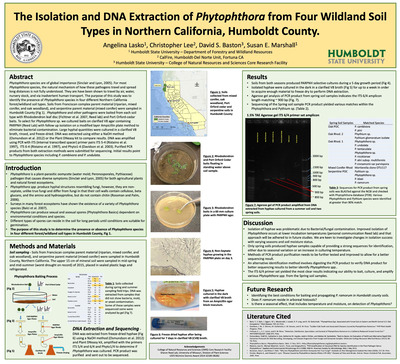
Phytophthora species are of global importance (Sinclair and Lyon, 2005). For most Phytophthora species, the natural mechanism of how these pathogens travel and spread long distances is not fully understood. They are have been shown to travel by air, water, nursery stock, and via inadvertent human transport. The purpose of this study was to identify the presence of Phytophthora species in four different Northern California forest/wildland soil types. Soils from Franciscan complex parent material (riparian, mixed conifer, and oak woodland), and serpentine parent material (mixed conifer) were sampled in Humboldt County (Fig 1). Phytophthora and other pathogens were baited from each soil type with Rhododendron leaf disc (Fichtner et al. 2007, Reed lab) and Port Orford-cedar baits. To select for Phytophthora sp. we cultured baits on clarified VS agar containing PARPNH (Reed Lab) with follow up isolation on a modified layer Ampicillin plate method to eliminate bacterial contamination. Large hyphal quantities were cultured in a clarified VS broth, rinsed, and freeze-dried. DNA was extracted using either a NaOH method (Osmundson et al. 2012) or the Plant DNeasy kit to compare results. DNA was amplified using PCR with ITS (internal transcribed spacer) primer pairs ITS 5-4 (Ristaino et al. 1997), ITS 6-4 (Ristaino et al. 1997), and Phytol-4 (Davidson et al. 2003). Purified PCR products from both extraction methods were submitted for sequencing. Initial results point to Phytophthora species including P. cambivora and P. undulata.
-
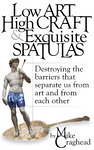
Low Art, High Craft, & Exquisite Spatulas: Destroying the Barriers That Separate Us from Art and from Each Other
Mike Craghead
Wrapped up in a snarky idealism, it starts as a funny and poignant love letter to art, and winds up making a compelling case for a kinder, more connected world. Paperback, eBook, Audiobook and Podcast available at LowArtHighCraft.com.
-

Toward Automated Thesis Classification: Open-Sourced AI Foundations for Libraries
Courtney Rowe
University libraries often face challenges in making student research more accessible. Manual tagging of theses is time-consuming, while commercial AI tools can be costly and limit institutional control. This project, in collaboration with the Cal Poly Humboldt Press and the TIDE computing cluster, fine-tuned an open-source AI model, ModernBERT, to automatically classify theses using the UN Sustainable Development Goals. The model performed well, demonstrating a promising, cost-effective approach for libraries to enhance research discoverability while retaining ownership and flexibility.
-
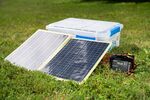
Step by step 40W solar manual
Kyle Wolfe and Lonny Grafman
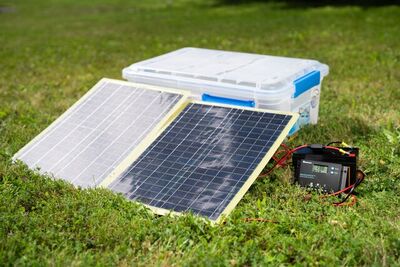
This guide provides instructions on how to create a 40 W solar power array with a 120 Wh energy capacity and the ability to supply power to both DC and AC loads. The total cost to build this system is around $200 USD (depending on sourcing) including the required tools.
-
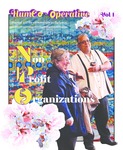
HumCo-Operative Volume 1
Lex Valtenbergs
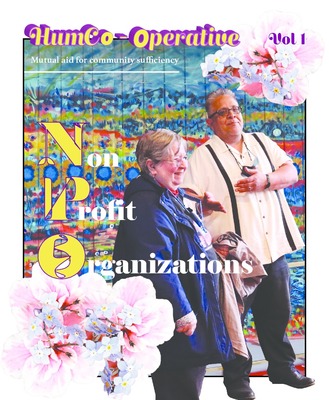
Throughout Humboldt County, there are numerous non-profit organizations made for and by the people that serve the local community. Interdependent sufficiency and mutual aid is key in a rural and isolated region like Humboldt. Grassroots organizations empower and connect community members across intersectional lines. Read on to learn more!
-

The Flying Mouse
Mariko Pratt
Merton, an adventurous mouse, has always dreamt of one day flying. Although his mouse family does not approve of his flying hobby, he never gave up on his dream. Through the help of his brother and other fellow creatures, Merton might finally reach the sky!
Printing is not supported at the primary Gallery Thumbnail page. Please first navigate to a specific Image before printing.